Japan: What It's Famous For, Iconic Landmarks, Prefectures, History and the Meaning of the Japanese Flag

Japan is a country where the ancient and the ultra-modern live side by side: wooden temples and neon-lit streets, tea ceremonies and bullet trains, snow monkeys and robots. Stretching for around 3,000 km across a chain of mountainous islands in the Pacific, it is the land of Mount Fuji and cherry blossom, of sushi, anime and video games, of samurai castles, hot springs and some of the safest, cleanest and most punctual cities in the world. In this guide we explore what Japan is famous for, its most distinctive landmarks, the most popular prefectures and what each one offers, a timeline of Japanese history, and the meaning behind the simple red disc on a white field that makes up the Japanese flag.
Japan at a glance
- Name: Japan is called Nihon or Nippon in Japanese, written with characters meaning "origin of the sun", which is why it is often called "the Land of the Rising Sun"
- Capital: Tokyo; other major cities include Yokohama, Osaka, Nagoya, Sapporo, Fukuoka, Kobe and Kyoto
- Population: around 123 million, and slowly falling; Japan has one of the oldest populations in the world
- Area: about 378,000 km², spread over the four main islands of Honshu, Hokkaido, Kyushu and Shikoku and more than 14,000 smaller islands
- Language: Japanese, written with a combination of kanji (characters borrowed from Chinese) and two native scripts, hiragana and katakana; the Ainu of Hokkaido, recognised by law as an Indigenous people in 2019, have their own language
- Currency: the Japanese yen (JPY), with the symbol ¥; new banknotes were introduced in 2024
- Administrative divisions: 47 prefectures, grouped informally into eight regions, from Hokkaido in the north to Kyushu and Okinawa in the south
- Government: a constitutional monarchy with a parliamentary system; the emperor is the symbol of the state, and the prime minister leads the government; Emperor Naruhito has reigned since 2019, and Sanae Takaichi became Japan's first woman prime minister in 2025
- National symbols: the flag (the Hinomaru), the national anthem "Kimigayo", the chrysanthemum (the imperial seal) and the cherry blossom; the green pheasant is the national bird
- National days: National Foundation Day on 11 February, celebrating the legendary founding of the nation, and the Emperor's Birthday on 23 February
- Highest mountain: Mount Fuji (3,776 m), an active volcano
- Longest river: the Shinano River, about 367 km long, which flows through Nagano and Niigata to the Sea of Japan
- Standout facts: Japan sits on the Pacific "Ring of Fire" and has more than 100 active volcanoes; its Shinkansen bullet trains have run since 1964, and Japanese people have one of the longest life expectancies in the world
What is Japan famous for?
Japanese food
Japanese food, or washoku, is recognised by UNESCO as part of humanity's intangible cultural heritage, and it is loved around the world for its freshness, seasonality and beautiful presentation. Sushi, vinegared rice topped or rolled with fish and other ingredients, and sashimi, thinly sliced raw fish, are the best-known dishes, but Japan is just as passionate about ramen, noodle soups with countless regional styles, tempura, udon and soba noodles, yakitori skewers, okonomiyaki savoury pancakes and wagyu beef. A traditional meal is built around rice, miso soup and pickles, and green tea, especially powdered matcha, is central to Japanese life. Tokyo is often said to have more Michelin-starred restaurants than any other city in the world.
Anime, manga and video games
Japan is a pop-culture superpower. Manga, Japanese comics, are read by people of all ages, and anime, Japanese animation, has fans all over the world, from the films of Studio Ghibli, whose Spirited Away won an Oscar in 2003, to series such as Dragon Ball, One Piece and Demon Slayer. Japan also gave the world many of its favourite video games and characters, including Super Mario, Pokémon, Zelda, Sonic and Pac-Man, and companies such as Nintendo and Sony, maker of the PlayStation. Characters such as Hello Kitty have made kawaii, or "cute", culture famous far beyond Japan.
Cherry blossom and the seasons
Every spring, Japan turns pink and white as the cherry blossom (sakura) opens, beginning in the south in March and moving north over the following weeks. Weather forecasters track the "cherry blossom front", and friends, families and colleagues gather under the trees for hanami, blossom-viewing picnics. The blossoms, which last only about a week, are a symbol of the beauty and fragility of life. In autumn, people travel to see the red and gold maple leaves, known as koyo, and the changing seasons are celebrated in food, poetry and festivals all year round.
Technology, design and the bullet train
Japan is famous for its technology, from cars made by Toyota, Honda and Nissan to cameras, electronics and robots. The Shinkansen, or bullet train, opened in 1964 between Tokyo and Osaka, the first high-speed railway of its kind, and is famous for its speed, safety record and punctuality. Japanese inventions and innovations include instant noodles, the Walkman, emojis, the QR code and high-tech toilets, and Japanese design is admired for its simplicity, precision and attention to detail.
Traditional arts and culture
Japan has preserved many traditional arts. The tea ceremony (chanoyu or sado) turns the preparation of matcha into a meditative ritual; ikebana is the art of flower arranging; and origami is the art of folding paper. Traditional theatre includes the stately masked drama Noh, the colourful kabuki and bunraku puppet theatre. The kimono is still worn for weddings, festivals and special occasions, often with a light cotton version, the yukata, in summer. Japanese poetry gave the world the haiku, and woodblock prints such as Hokusai's The Great Wave off Kanagawa are among the most recognisable images in art.
Sumo, martial arts and baseball
Sumo, Japan's national sport, is a dramatic contest of strength between huge wrestlers, steeped in Shinto ritual, with six grand tournaments held every year. Japan is also the home of martial arts such as judo, karate, kendo and aikido; judo and karate have both featured at the Olympic Games. Baseball is enormously popular, and players such as Shohei Ohtani, who both pitches and hits at the highest level in Major League Baseball, are global stars. Japan has also hosted the Rugby World Cup in 2019 and the Summer Olympics twice, in 1964 and 2021.
Hot springs and nature
Thanks to its volcanoes, Japan has thousands of onsen, or hot springs, where people bathe in mineral-rich water, often outdoors with views of mountains or the sea. Staying at a ryokan, a traditional inn with tatami-mat rooms, futons and elaborate meals, is a classic Japanese experience. About two-thirds of Japan is covered in forest, and the country has spectacular national parks, from snowy mountains in Hokkaido to coral reefs in Okinawa, as well as famous wildlife such as the snow monkeys that bathe in hot springs in Nagano.
Shrines, temples and festivals
Most Japanese people take part in both Shinto, Japan's native faith, centred on kami, the spirits of nature and ancestors, and Buddhism, which arrived from mainland Asia in the 6th century. Shrines are marked by torii gates, and temples by pagodas and great wooden halls. Festivals, or matsuri, fill the calendar, from the Gion Matsuri in Kyoto, with its giant floats, to the Sapporo Snow Festival and summer fireworks displays across the country.
Japan's most distinctive landmarks
Mount Fuji
Rising in an almost perfect cone above the countryside west of Tokyo, Mount Fuji (Fujisan) is Japan's highest mountain at 3,776 m and its most famous symbol. It is an active volcano, which last erupted in 1707, and on clear days it can be seen from Tokyo, around 100 km away. Fuji has been sacred for centuries and has inspired countless artists, including Hokusai in his series Thirty-Six Views of Mount Fuji. In 2013 it was added to UNESCO's World Heritage List as a "place of worship and source of artistic inspiration". During the summer climbing season, usually from July to early September, many thousands of people climb to the summit, many of them overnight to watch the sunrise. Classic views include the Chureito Pagoda in Fujiyoshida and the Fuji Five Lakes, such as Lake Kawaguchi.
Fushimi Inari Taisha, Kyoto

Fushimi Inari Taisha in southern Kyoto is the head shrine of Inari, the Shinto kami of rice and prosperity, whose messengers are foxes. It is famous for its thousands of vermilion torii gates, which form tunnels winding up the wooded slopes of Mount Inari. Each gate has been donated by a business or individual, and the donor's name is written on the back. Walking the full trail to the summit and back takes two to three hours, passing smaller shrines, stone foxes and viewpoints over the city. The shrine is open day and night, and early morning or evening is the best time to avoid the crowds.
Kinkaku-ji, the Golden Pavilion, Kyoto

Shimmering above a mirror-like pond, Kinkaku-ji, the "Temple of the Golden Pavilion", is one of the most photographed buildings in Japan. It was built in the late 14th century as a retirement villa for the shogun Ashikaga Yoshimitsu and became a Zen Buddhist temple after his death. Its upper two floors are covered in gold leaf. The original pavilion was burned down by a young monk in 1950, an event that inspired Yukio Mishima's novel The Temple of the Golden Pavilion, and the present building is a faithful reconstruction completed in 1955. It is part of the UNESCO-listed Historic Monuments of Ancient Kyoto.
Itsukushima Shrine and its floating torii, Miyajima

On the sacred island of Miyajima in Hiroshima Bay, the great vermilion torii of Itsukushima Shrine appears to float on the water at high tide; at low tide, visitors can walk out to its base across the sand. The shrine itself, a series of halls and corridors built on stilts over the sea, dates back many centuries, and the present gate, about 16 m tall, was built in 1875. The gate reopened in 2022 after a major restoration. Itsukushima is a UNESCO World Heritage Site and is traditionally counted as one of the "Three Views of Japan". The island is also known for its tame deer and the forest walks up Mount Misen.
Himeji Castle, Hyogo

Himeji Castle is widely considered the finest surviving feudal castle in Japan. Its brilliant white plastered walls and elegant, layered roofs have earned it the nickname "White Heron Castle" (Shirasagi-jo). The castle reached its present form in the early 17th century and is a maze of gates, walls and baileys designed to confuse attackers. Unlike many Japanese castles, which were destroyed by fire, war or demolition and later rebuilt in concrete, Himeji's main keep is an original wooden structure that survived the bombing of the city in the Second World War. In 1993 it became one of Japan's first UNESCO World Heritage Sites, and a major restoration was completed in 2015.
The Hiroshima Peace Memorial (Atomic Bomb Dome)

On 6 August 1945, the first atomic bomb used in war exploded almost directly above this building, then the Hiroshima Prefectural Industrial Promotion Hall, designed by the Czech architect Jan Letzel and completed in 1915. Most of the city was destroyed and tens of thousands of people were killed instantly, with many more dying in the months and years that followed. The ruined building, known as the Genbaku Dome or Atomic Bomb Dome, has been preserved as it stood after the blast. Today it is the centrepiece of the Hiroshima Peace Memorial Park, with its museum and cenotaph, and a UNESCO World Heritage Site, a powerful symbol of the hope for a world without nuclear weapons.
Senso-ji, Tokyo

In the old district of Asakusa, Senso-ji is Tokyo's oldest temple, founded according to tradition in 628 after two fishermen pulled a statue of Kannon, the bodhisattva of compassion, from the nearby river. Visitors enter through the Kaminarimon, or "Thunder Gate", with its giant red paper lantern, and walk along Nakamise-dori, a street of stalls selling snacks and souvenirs, to the main hall and a five-storey pagoda. Much of the temple was destroyed in the bombing of Tokyo in 1945 and has since been rebuilt. Asakusa's Sanja Matsuri, held every May, is one of Tokyo's liveliest festivals.
Shibuya Crossing, Tokyo

Outside Shibuya Station, the Shibuya Scramble Crossing is often described as the busiest pedestrian crossing in the world. When the lights turn red for traffic in every direction at once, a tide of people surges across from all sides, under giant video screens and neon signs, in a scene that has become a symbol of modern Tokyo. Nearby stands the bronze statue of Hachiko, the loyal Akita dog who waited at the station every day for nearly ten years after his owner's death in 1925, and is a favourite meeting point.
Nikko Toshogu, Tochigi

In the forested mountains north of Tokyo, Nikko Toshogu is the lavish mausoleum shrine of Tokugawa Ieyasu, founder of the Tokugawa shogunate, which ruled Japan for more than 250 years. Most of its buildings were rebuilt in their present ornate form in the 1630s by his grandson, the shogun Iemitsu. Its highlight, the Yomeimon Gate, is covered in hundreds of carved and painted figures, and the shrine's carvings include the famous "three wise monkeys", who see no evil, hear no evil and speak no evil. The shrines and temples of Nikko are a UNESCO World Heritage Site.
The most popular prefectures in Japan and what they offer
Japan is divided into 47 prefectures, from the snowy north of Hokkaido to the subtropical islands of Okinawa, each with its own landscapes, dialects and local dishes. Here are some of the highlights.
Tokyo
The capital is the heart of one of the largest metropolitan areas in the world, home to more than 35 million people, yet it is famously safe, clean and efficient. Tokyo is really a collection of distinct neighbourhoods: the neon and fashion of Shibuya and Shinjuku, the electronics and anime shops of Akihabara, the old-fashioned streets of Asakusa, the upmarket boutiques of Ginza and the youth culture of Harajuku. Visitors can see the Imperial Palace, the Meiji Jingu shrine in its forest, and the city from the Tokyo Skytree, at 634 m one of the tallest towers in the world. Tokyo is also a world capital of food, from tiny ramen counters to celebrated sushi restaurants.
Kyoto

For more than a thousand years, from 794 to 1868, Kyoto was Japan's imperial capital, and it remains the heart of traditional Japanese culture. The city has well over a thousand Buddhist temples and Shinto shrines, including Kinkaku-ji, Fushimi Inari, the wooden terrace of Kiyomizu-dera and the Zen rock garden of Ryoan-ji, many of them part of a UNESCO World Heritage Site. In the Gion district, visitors may glimpse geiko and maiko, as geisha and their apprentices are known in Kyoto, and in Arashiyama, a path leads through a towering bamboo forest. Kyoto is also famous for its refined kaiseki cuisine, tofu and matcha sweets.
Osaka

Japan's third-largest city, Osaka, is known for its friendly, down-to-earth people, its comedy and above all its food; it has long been called "the nation's kitchen", and locals have a word, kuidaore, for eating until you drop. The Dotonbori canal is lined with giant neon signs and street stalls selling takoyaki (octopus balls) and okonomiyaki. Other highlights include Osaka Castle, rebuilt in the 20th century, the Universal Studios Japan theme park and, in 2025, the World Expo, held on the artificial island of Yumeshima. Osaka is also an easy base for day trips to Kyoto, Nara and Kobe.
Nara
Before Kyoto, Nara was Japan's capital from 710 to 784, and it is full of ancient treasures. At Todai-ji, an enormous wooden hall houses a bronze Great Buddha about 15 m tall, and nearby Horyu-ji contains some of the oldest surviving wooden buildings in the world. Nara Park is famous for its more than a thousand free-roaming deer, regarded as sacred messengers of the gods, which bow to visitors in return for special deer biscuits. Nara's temples and shrines are a UNESCO World Heritage Site.
Hokkaido

Japan's northernmost main island, Hokkaido, is a land of wide open spaces, volcanoes, lakes and powdery snow. In winter, skiers flock to resorts such as Niseko, and the capital, Sapporo, hosts the famous Snow Festival, with giant ice and snow sculptures. In summer, the lavender fields of Furano bloom, and hikers explore national parks such as Shiretoko, a UNESCO World Heritage Site where brown bears roam, and Akan-Mashu, home to the strikingly clear Lake Mashu. Hokkaido is the homeland of the Indigenous Ainu people, whose culture is celebrated at the Upopoy National Ainu Museum, and it is famous for seafood, dairy products and Sapporo beer.
Okinawa

Far to the south, the subtropical islands of Okinawa have white sand beaches, coral reefs and a distinctive culture. For centuries they formed the independent Ryukyu Kingdom, which traded widely across East Asia before being annexed by Japan in 1879. Okinawa is the birthplace of karate, and it has its own music, played on the three-stringed sanshin, and its own cuisine. The Kerama Islands, a national park, are famous for diving and snorkelling in exceptionally clear water. Okinawa saw one of the bloodiest battles of the Second World War in 1945 and remained under US administration until 1972. Shuri Castle, the royal palace of the Ryukyu kings in Naha, has been painstakingly rebuilt after a fire in 2019, with work on its main hall due to be completed in 2026.
Gifu: Shirakawa-go and Takayama

In the mountains of central Japan, Gifu prefecture is home to Shirakawa-go, a village of gassho-zukuri farmhouses, whose steep thatched roofs, said to resemble hands joined in prayer, are built to shed heavy winter snow. Together with the nearby villages of Gokayama in Toyama prefecture, it is a UNESCO World Heritage Site, and it looks especially magical when lit up on winter evenings. Nearby, the old town of Takayama has beautifully preserved merchant houses, sake breweries and morning markets, and its spring and autumn festivals feature elaborately decorated floats.
Ishikawa: Kanazawa

On the Sea of Japan coast, Kanazawa, the capital of Ishikawa prefecture, was the seat of the powerful Maeda clan during the Edo period and escaped serious bombing in the Second World War. Its highlight is Kenroku-en, traditionally counted as one of the "Three Great Gardens of Japan", with its ponds, streams, stone lanterns and carefully trained pine trees. The city also has a well-preserved samurai district, old geisha quarters and an excellent fish market, and it produces the great majority of Japan's gold leaf, which locals even sprinkle on ice cream. In January 2024, a powerful earthquake struck Ishikawa's Noto Peninsula, and the region is still rebuilding.
Hiroshima
Today a lively, modern city, Hiroshima has rebuilt itself from the devastation of 1945 to become a city of peace. Visitors come to see the Peace Memorial Park, the Atomic Bomb Dome and the Peace Memorial Museum, and to hear the stories of the survivors, known as hibakusha. The prefecture is also home to the island of Miyajima and its floating torii, and to Hiroshima's own style of okonomiyaki, layered with noodles. Along the coast, the Shimanami Kaido, a road and cycle route across a chain of islands and bridges in the Seto Inland Sea, is a favourite with cyclists.
Nagano and the Japanese Alps
The mountainous prefecture of Nagano, which hosted the 1998 Winter Olympics, lies at the heart of the Japanese Alps, a region of high peaks, ski resorts and hot springs. It is home to the snow monkeys of Jigokudani, Japanese macaques that bathe in natural hot springs in winter, to Matsumoto Castle, one of the few castles in Japan with an original keep, nicknamed "Crow Castle" for its black walls, and to the ancient temple of Zenko-ji. Hikers come for the Kamikochi valley, and the mountain towns along the old Nakasendo road, such as Tsumago, preserve the atmosphere of the Edo period.
Kyushu: Miyazaki, Fukuoka and Kagoshima

Japan's southern main island, Kyushu, is known for its warm climate, volcanoes and hot springs. In Miyazaki prefecture, the Takachiho Gorge is a narrow chasm of basalt cliffs where visitors row boats beneath the Manai Falls; in Japanese mythology, nearby Takachiho is where the sun goddess Amaterasu hid in a cave, plunging the world into darkness. Fukuoka is famous for its tonkotsu (pork-bone) ramen and open-air food stalls called yatai, Kagoshima sits opposite Sakurajima, one of Japan's most active volcanoes, and Beppu in Oita is famous for its steaming hot springs. Kyushu is also home to Nagasaki, where the second atomic bomb was dropped on 9 August 1945, and which has a long history of trade with Europe and China.
A timeline of Japanese history
- Around 38,000 years ago: The first humans are known to have reached the Japanese islands.
- c. 14,000–300 BCE: The Jomon period; hunter-gatherers make some of the oldest known pottery in the world.
- c. 300 BCE–300 CE: The Yayoi period; wet-rice farming and metalworking spread from the Asian mainland.
- 3rd–6th centuries: The Kofun period, named after the great keyhole-shaped burial mounds of early rulers.
- 6th century: Buddhism is introduced to Japan from Korea; the traditional dates are 538 and 552.
- 604: The Seventeen-Article Constitution, a set of moral and political principles, is attributed to Prince Shotoku.
- 710: Nara becomes the first permanent capital.
- 794: The capital moves to Heian-kyo, now Kyoto, beginning the Heian period.
- Early 11th century: Murasaki Shikibu writes The Tale of Genji, often described as one of the world's first novels.
- 1185: The Minamoto clan defeats the Taira in the Genpei War.
- 1192: Minamoto no Yoritomo is named shogun, and the Kamakura shogunate rules from eastern Japan.
- 1274 and 1281: Mongol invasion fleets are driven back, the second time helped by a great storm remembered as the kamikaze, or "divine wind".
- 1336–1573: The Ashikaga (Muromachi) shogunate; Zen Buddhism, the tea ceremony and Noh theatre flourish.
- 1467: The Onin War begins more than a century of conflict known as the Sengoku, or Warring States, period.
- 1543: Portuguese traders reach the island of Tanegashima, bringing firearms.
- 1549: The Jesuit missionary Francis Xavier arrives in Japan.
- 1590: Toyotomi Hideyoshi completes the unification of Japan.
- 1600: Tokugawa Ieyasu wins the Battle of Sekigahara.
- 1603: Ieyasu becomes shogun, and the Tokugawa shogunate rules from Edo (now Tokyo) for more than 250 years.
- 1630s: The shogunate tightly restricts foreign contact and trade, a policy later called sakoku.
- 1853: US Commodore Matthew Perry arrives with warships, pressing Japan to open its ports.
- 1868: The Meiji Restoration returns power to the emperor; Edo is renamed Tokyo and becomes the capital.
- 1872: Japan's first railway opens, between Tokyo and Yokohama.
- 1889: The Meiji Constitution is proclaimed.
- 1894–1895: Japan defeats China in the First Sino-Japanese War, and Taiwan comes under Japanese rule.
- 1904–1905: Japan defeats Russia in the Russo-Japanese War.
- 1910: Japan annexes Korea, which remains under Japanese rule until 1945.
- 1923: The Great Kanto Earthquake devastates Tokyo and Yokohama.
- 1931–1945: Japan expands into Manchuria and wages war in China from 1937; in December 1941 it attacks Pearl Harbor and enters the Second World War in the Pacific.
- 1945: Atomic bombs are dropped on Hiroshima on 6 August and Nagasaki on 9 August; Japan announces its surrender on 15 August.
- 1947: A new constitution comes into force on 3 May, making the emperor a symbol of the state.
- 1952: The Allied occupation ends.
- 1956: Japan joins the United Nations.
- 1964: Tokyo hosts the Summer Olympics, and the first Shinkansen line opens.
- 1972: Okinawa returns to Japanese administration, and Sapporo hosts the Winter Olympics.
- 1989: Emperor Hirohito dies, and the Heisei era begins under Emperor Akihito.
- 1995: The Great Hanshin earthquake strikes Kobe.
- 2011: The Great East Japan Earthquake and tsunami strike on 11 March, killing nearly 20,000 people and causing a nuclear disaster at Fukushima.
- 2013: Mount Fuji and washoku are recognised by UNESCO.
- 2019: Emperor Akihito abdicates, and the Reiwa era begins under Emperor Naruhito; Japan hosts the Rugby World Cup.
- 2021: Tokyo hosts the Summer Olympics, postponed for a year by the COVID-19 pandemic.
- 2024: An earthquake strikes the Noto Peninsula on New Year's Day, and new banknotes enter circulation.
- 2025: Osaka hosts the World Expo, and Sanae Takaichi becomes Japan's first woman prime minister.
- 2026: Takaichi's Liberal Democratic Party wins a large majority in a snap general election in February.
The Japanese flag: its history and meaning
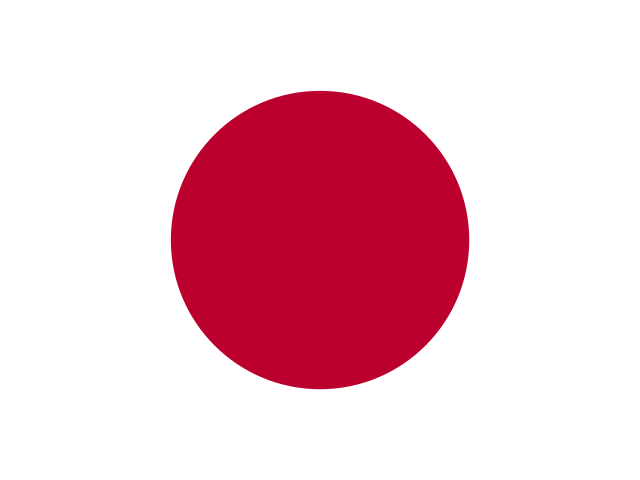
The flag of Japan is one of the simplest and most recognisable in the world: a white rectangle with a crimson disc in the centre. Its official name is Nisshoki, the "sun-mark flag", but it is much more commonly called the Hinomaru, the "circle of the sun". Under the law of 1999, the flag's proportions are 2:3 and the diameter of the disc is three-fifths of the flag's height.
What the colours and symbols mean
- The red disc represents the sun, a reference to Japan's name, "origin of the sun", and to the importance of the sun in Japanese tradition. In Japanese mythology, the imperial family is said to descend from the sun goddess, Amaterasu.
- The white field is often said to represent honesty, purity and integrity, although this is a popular interpretation rather than an official meaning.
- Red and white (kohaku) are traditional colours of celebration in Japan, used at weddings, festivals and New Year.
Where the flag came from
Sun symbols have been used in Japan for many centuries, appearing on fans, banners and seals; according to tradition, samurai of the Genpei War in the 12th century carried fans decorated with a red sun. The red-and-white sun design was used on ships during the Edo period, and in 1854, as foreign ships began arriving, the Tokugawa shogunate ordered Japanese ships to fly it to distinguish them from foreign vessels. In 1870, the new Meiji government made it the flag for merchant ships, and it came to be used as the national flag. However, it was not formally made the national flag by law until the Act on National Flag and Anthem of 13 August 1999, which also confirmed "Kimigayo" as the national anthem and set the flag's exact proportions. Because of its use during the war years, the flag remains the subject of debate for some people in Japan and in neighbouring countries.
Flag facts most people get wrong
- The Hinomaru is not the Rising Sun Flag. The Kyokujitsu-ki, with sixteen red rays spreading from the sun, is a different flag, historically used by the armed forces and still flown by the Maritime Self-Defense Force; it is viewed critically in parts of East Asia because of its wartime associations.
- It only became the official national flag by law in 1999. For well over a century before that, it served as the national flag by custom.
- The disc used to be slightly off-centre. Under the 1870 rules, the disc was placed a little towards the hoist; the 1999 law put it exactly in the centre and changed the proportions from 7:10 to 2:3.
- The red is crimson. The law specifies beni-iro, a deep crimson, rather than a bright scarlet.
- "Hinomaru" is not the official name. The law calls it the Nisshoki, though most Japanese people use Hinomaru.
The Japanese people: tradition and modern life
Japanese society places great value on harmony (wa), consideration for others and doing things properly. Politeness and courtesy are woven into daily life, from bowing when greeting people to removing shoes when entering a home, and visitors are often struck by how clean and orderly public spaces are, how rarely things are lost or stolen and how punctual the trains are. The idea of omotenashi, wholehearted hospitality, shapes everything from traditional inns to convenience stores.
At the same time, Japan is a place of endless creativity and subculture, from fashion and street style in Tokyo to anime fan culture, karaoke, which was invented in Japan, and a thriving music scene. Many people combine old and new without contradiction: a young professional might visit a shrine at New Year, celebrate Christmas with friends and get married in a Western-style ceremony. Japan's population is ageing, and the country is home to an unusually large number of people aged 100 and over, often linked to diet, active lifestyles and strong community ties, especially in Okinawa.
Most people in Japan are ethnically Japanese, but the country also includes the Indigenous Ainu of Hokkaido, the Ryukyuan people of Okinawa, long-established Korean and Chinese communities and a growing number of residents from other countries. Abroad, there are large communities of Japanese descent in Brazil, the United States, especially Hawaii and California, and Peru, and Japanese food, design and pop culture are admired around the world.
Frequently asked questions about Japan
What is Japan most famous for?
Japan is famous for Mount Fuji, cherry blossom, Kyoto's temples and shrines and castles such as Himeji; for sushi, ramen and green tea; for anime, manga and video games such as Super Mario and Pokémon; for bullet trains and technology; for traditions such as the tea ceremony, kimono and sumo; and for hot springs and its exceptionally clean, safe cities.
What do the colours of the Japanese flag mean?
The red disc represents the sun, reflecting Japan's name, which means "origin of the sun", and its nickname, "the Land of the Rising Sun". The white background is popularly said to stand for honesty and purity. Red and white together are also traditional colours of celebration in Japan.
What is the capital of Japan?
Tokyo has been the capital of Japan since 1868, when the emperor moved there from Kyoto and the city, previously called Edo, was renamed Tokyo, meaning "eastern capital".
Why is Japan called the Land of the Rising Sun?
Japan's name, Nihon or Nippon, is written with characters meaning "sun" and "origin", because, seen from China and the Asian mainland, Japan lies to the east, where the sun rises. The name has been used for well over a thousand years.
How many prefectures does Japan have?
Japan has 47 prefectures: one metropolis (Tokyo), one circuit (Hokkaido), two urban prefectures (Osaka and Kyoto) and 43 other prefectures. The largest by area is Hokkaido, and the most populous is Tokyo.
When is the best time to visit Japan?
Spring, when the cherry blossom blooms from late March to early April in cities such as Tokyo and Kyoto, and autumn, when the leaves turn red and gold from around mid-November, are the most popular seasons. Winter is ideal for skiing and snow festivals, while summer brings fireworks, festivals and the climbing season on Mount Fuji, but can be hot and humid.
Own a square of the Japanese flag
On 195 Flags, the flag of Japan is being rebuilt one square at a time by people in Japan and around the world. Claim your square for $1.99 and seal a message and a photo inside it: a time capsule for your future self and the generations who come after you. And when the Japanese flag is completely filled, one square owner wins $40,000.
Claim your square of the Japanese flag →
Photo credits
- Chureito Pagoda and Mount Fuji (cover): Dang Son, CC0, via Wikimedia Commons
- Torii gates at Fushimi Inari Taisha, Kyoto: Basile Morin, CC BY-SA 4.0, via Wikimedia Commons
- Kinkaku-ji, Kyoto: Basile Morin, CC BY-SA 4.0, via Wikimedia Commons
- Itsukushima Shrine torii, Miyajima: JordyMeow, CC BY-SA 3.0, via Wikimedia Commons
- Himeji Castle: Reggaeman, Public domain, via Wikimedia Commons
- Hiroshima Peace Memorial (Atomic Bomb Dome): Jakub Hałun, CC BY 4.0, via Wikimedia Commons
- Kaminarimon gate, Senso-ji, Tokyo: Zairon, CC BY-SA 4.0, via Wikimedia Commons
- Shibuya Scramble Crossing, Tokyo: Benh LIEU SONG (Flickr), CC BY-SA 2.0, via Wikimedia Commons
- Yomeimon Gate, Nikko Toshogu: Jpatokal, CC BY-SA 4.0, via Wikimedia Commons
- Sagano bamboo forest, Arashiyama, Kyoto: Naokijp, CC BY-SA 4.0, via Wikimedia Commons
- Dotonbori at night, Osaka: Sakai Yayoi, CC0, via Wikimedia Commons
- Lake Mashu, Hokkaido: Makoto Nakashima, CC BY 2.0, via Wikimedia Commons
- Kerama Islands, Okinawa: SteFou!, CC BY 2.0, via Wikimedia Commons
- Gassho-zukuri farmhouses, Shirakawa-go: 663highland, CC BY 2.5, via Wikimedia Commons
- Kenroku-en garden, Kanazawa: DimiTalen, CC0, via Wikimedia Commons
- Takachiho Gorge, Miyazaki: Raita Futo from Tokyo, Japan, CC BY 2.0, via Wikimedia Commons
The Japanese flag image is from 195flags.com.


