Italy: What It's Famous For, Iconic Landmarks, Regions, History and the Meaning of the Italian Flag

Italy is a country where almost every town seems to hold a masterpiece. It was the heart of the Roman Empire and the birthplace of the Renaissance, and it has given the world pizza, pasta, opera, espresso and some of the most admired art and design ever made. From the Alps and the Dolomites in the north to the volcanoes and lemon groves of the south, its landscapes are as varied as its food. In this guide we explore what Italy is famous for, its most distinctive landmarks, the most popular regions and what each one offers, a timeline of Italian history, and the meaning behind the green, white and red of the Italian flag.
Italy at a glance
- Official name: the Italian Republic (Repubblica Italiana)
- Capital: Rome, also the largest city; other major cities include Milan, Naples, Turin, Palermo, Florence and Venice
- Population: around 59 million
- Area: about 302,000 km²
- Language: Italian; German, French, Slovene, Ladin, Sardinian and several other minority languages are protected in parts of the country
- Currency: the euro (€), which replaced the Italian lira in 2002
- Regions: 20 regions, five of which (Sicily, Sardinia, Aosta Valley, Trentino-Alto Adige/Südtirol and Friuli Venezia Giulia) have special autonomy
- Government: a parliamentary republic; the president is head of state, and the prime minister, formally the President of the Council of Ministers, leads the government
- National symbols: the green, white and red Tricolore, the emblem of the Republic with its five-pointed star and cogwheel, and the national anthem, Il Canto degli Italiani, often called Fratelli d'Italia ("Brothers of Italy")
- National day: Republic Day, 2 June, marking the 1946 referendum in which Italians chose a republic
- Highest mountain: Mont Blanc (Monte Bianco), about 4,805 m, on the border with France
- Longest river: the Po, which flows for about 650 km from the Alps to the Adriatic Sea
- Standout facts: two independent countries, Vatican City and San Marino, lie entirely within Italy's borders; Italy has around 60 UNESCO World Heritage Sites, among the most of any country; and it is home to three famous active volcanoes, Etna, Vesuvius and Stromboli
What is Italy famous for?
Food
Italian food is loved all over the world, yet in Italy itself it is deeply regional. Pizza as we know it was born in Naples, and the art of the Neapolitan pizza maker is recognised by UNESCO as part of the world's intangible cultural heritage. There are hundreds of shapes of pasta, each matched to its own sauces, from Rome's carbonara and cacio e pepe to Bologna's tagliatelle al ragù and Genoa's trofie with pesto. Risotto and polenta are favourites in the north, while the south is known for tomatoes, olive oil and seafood. Italy also gave the world gelato, tiramisu, Parmigiano Reggiano, Parma ham and mozzarella di bufala. Meals often end with an espresso, drunk standing at the bar in a matter of seconds, and Italy is one of the world's largest wine producers, famous for Chianti, Barolo, Amarone and the sparkling Prosecco.
Art and the Renaissance
Italy was the cradle of the Renaissance, the great revival of art and learning that began in Florence in the 14th and 15th centuries. Leonardo da Vinci, Michelangelo, Raphael, Botticelli, Donatello, Titian and Caravaggio were all Italian, and their works fill churches and galleries across the country, from the Uffizi in Florence to the Vatican Museums. Leonardo's Last Supper still covers a wall of a former refectory in Milan, and Michelangelo's David stands in Florence's Accademia Gallery.
Opera and music
Opera was born in Italy around 1600, and Italian remains the language of the opera house. Giuseppe Verdi, Giacomo Puccini, Gioachino Rossini and Gaetano Donizetti wrote many of the most performed operas in the world, and Milan's La Scala is one of the most famous theatres anywhere. Antonio Vivaldi composed The Four Seasons in Venice, the piano was invented by Bartolomeo Cristofori in Florence around 1700, and musicians everywhere still use Italian words such as piano, forte and allegro. In more recent times, singers such as Luciano Pavarotti and Andrea Bocelli became global stars.
Fashion, design and fast cars
Milan is one of the fashion capitals of the world, and Italian names such as Gucci, Prada, Armani, Versace, Valentino and Dolce & Gabbana are known everywhere. Italian design is just as celebrated in furniture, coffee machines and scooters such as the Vespa, first produced in 1946. Italy is also the home of Ferrari, Lamborghini, Maserati, Alfa Romeo and Fiat, and Ferrari is the oldest and most successful team in Formula One.
Inventors and scientists
Italy has produced some of history's greatest scientific minds. Galileo Galilei used the telescope to study the heavens and helped found modern science. Alessandro Volta invented the electric battery in 1800, which is why we measure electricity in volts, and Guglielmo Marconi pioneered radio, sharing the Nobel Prize in Physics in 1909. Enrico Fermi helped build the world's first nuclear reactor, and Maria Montessori developed the teaching method that bears her name.
Literature and language
Modern Italian grew largely out of the Tuscan dialect of Florence, thanks in great part to Dante Alighieri, whose Divine Comedy, written in the early 14th century, is one of the masterpieces of world literature. Petrarch and Boccaccio followed, and Niccolò Machiavelli's The Prince is still read today. Later classics include Alessandro Manzoni's The Betrothed and Carlo Collodi's The Adventures of Pinocchio, first published as a book in 1883.
Sport
Football, or calcio, is a national passion. The men's team has won the World Cup four times (1934, 1938, 1982 and 2006) and the European Championship twice (1968 and 2020), and clubs such as Juventus, AC Milan, Inter and Napoli have fans around the world. Cycling is another great love, and the Giro d'Italia, first held in 1909, is one of cycling's three Grand Tours. In 2024 Jannik Sinner became the first Italian man to reach number one in the world tennis rankings, and in 2026 Milan and Cortina d'Ampezzo hosted the Winter Olympic Games.
Festivals and traditions
The Carnival of Venice is famous for its elaborate masks and costumes, and in Siena the Palio, a bareback horse race around the shell-shaped Piazza del Campo, is held each summer on 2 July and 16 August. The Venice Film Festival, first held in 1932, is the oldest film festival in the world, and the Sanremo Music Festival is a television event every February. Around Christmas, many families set up a nativity scene, or presepe, and on 6 January children wait for La Befana, a kindly witch who brings sweets to good children and, legend says, coal to naughty ones.
Italy's most distinctive landmarks
The Colosseum, Rome
Begun by the emperor Vespasian around AD 70 and inaugurated by his son Titus in AD 80, the Colosseum is the largest amphitheatre ever built by the Romans. It could hold an estimated 50,000 spectators or more, who came to watch gladiators, wild animal hunts and public spectacles. Earthquakes and centuries of stone robbing have taken their toll, but its great oval of arches still dominates the centre of Rome. Next door, the Roman Forum and the Palatine Hill, where Rome's emperors built their palaces, complete one of the most remarkable archaeological areas in the world. In 2007 the Colosseum was voted one of the New Seven Wonders of the World.
The Leaning Tower of Pisa, Tuscany

The bell tower of Pisa Cathedral was begun in 1173, and it started to lean while it was still being built, because the soft ground beneath it could not take the weight. Construction stopped and started for nearly two centuries, and the tower was finally completed in the 14th century. Engineering work between 1990 and 2001 straightened it by about 40 cm and made it safe for visitors, and today it leans by roughly 4 degrees. It stands in the Piazza dei Miracoli, the "Square of Miracles", alongside the cathedral and baptistery, a UNESCO World Heritage Site. A popular story says Galileo dropped balls of different weights from the top to test his ideas about gravity, although historians are not sure it really happened.
Venice and the Grand Canal

Built on more than a hundred small islands in a lagoon, Venice was for centuries the capital of a powerful maritime republic, and it remains one of the most extraordinary cities on Earth. Instead of streets it has canals, crossed by around 400 bridges, and the S-shaped Grand Canal winds for about 4 km through the city, lined with palaces. The stone Rialto Bridge, completed in 1591, is the oldest of the bridges that cross it. At the heart of the city, St Mark's Square is framed by the golden mosaics of St Mark's Basilica and the Doge's Palace. Venice and its lagoon are a UNESCO World Heritage Site, and since 2020 a system of mobile flood barriers, known as MOSE, has helped protect the city from the highest tides.
Florence Cathedral

Florence's cathedral, Santa Maria del Fiore, was begun in 1296, but for decades nobody knew how to roof the vast space over its crossing. The solution came from Filippo Brunelleschi, who built a great dome between 1420 and 1436 without the wooden centring normally used to support a dome while it was built, using clever herringbone brick patterns and two shells, one inside the other. It is still the largest brick dome ever built, and visitors can climb more than 460 steps to the top. Beside it rise Giotto's slender bell tower and the Baptistery, whose gilded bronze doors by Lorenzo Ghiberti were nicknamed the "Gates of Paradise", reportedly by Michelangelo.
The Trevi Fountain, Rome

Completed in 1762 to a design by Nicola Salvi, the Trevi Fountain is the largest and most famous baroque fountain in Rome. Its central figure, Oceanus, rides a shell-shaped chariot pulled by sea horses, and the water comes from the Aqua Virgo, an aqueduct first built in Roman times. Tradition says that if you throw a coin over your shoulder into the fountain, you will one day return to Rome. Coins worth well over a million euros are collected every year and given to charity. The fountain became world famous after Anita Ekberg waded into it in Federico Fellini's 1960 film La Dolce Vita.
St Peter's Basilica and the Vatican

Strictly speaking, St Peter's Basilica is not in Italy at all: it stands in Vatican City, the world's smallest independent state, which is surrounded by Rome and is the seat of the Pope. The present basilica was built between 1506 and 1626 over the traditional burial place of St Peter, and Michelangelo designed its enormous dome. In front of it, Gian Lorenzo Bernini's curving colonnades embrace St Peter's Square. Nearby, the Vatican Museums hold one of the world's great art collections and lead to the Sistine Chapel, whose ceiling Michelangelo painted between 1508 and 1512.
Pompeii and Mount Vesuvius, Campania

In AD 79, Mount Vesuvius erupted and buried the Roman towns of Pompeii and Herculaneum under ash and volcanic debris. Rediscovered in the 18th century, Pompeii offers an astonishingly detailed picture of daily life nearly 2,000 years ago, with streets, shops, bakeries, bathhouses, painted villas and even graffiti on the walls. Plaster casts made from the hollows left by victims' bodies are among its most moving sights. Excavations continue to this day, regularly revealing new frescoes and finds, and the site is a UNESCO World Heritage Site. Vesuvius is still an active volcano, and visitors can hike up to its crater.
The Dolomites

In Italy's north-east, the Dolomites are a range of jagged pale peaks, sheer walls and green high pastures, listed as a UNESCO World Heritage Site in 2009. Their rock often glows pink and orange at sunrise and sunset, an effect known in the Ladin language as enrosadira. The three great towers of the Tre Cime di Lavaredo are one of the most photographed sights in the Alps, and the highest peak, the Marmolada, reaches about 3,340 m. In winter the Dolomites are a world-famous skiing area, and in summer they are crossed by hiking trails and vie ferrate, protected climbing routes, some first built during the First World War.
The most popular regions in Italy and what they offer
Italy is divided into 20 regions, each with its own history, dialects, food and character. Here are the highlights.
Lazio and Rome
The region around the capital is dominated by Rome, the "Eternal City", which has been inhabited for nearly three thousand years. Alongside the Colosseum and the Vatican, visitors come for the Pantheon, a Roman temple whose concrete dome, built under the emperor Hadrian, is still the largest unreinforced concrete dome in the world. The Spanish Steps, Piazza Navona and the lively streets of Trastevere make Rome a city for wandering, and Roman cooking is famous for carbonara, amatriciana and artichokes. Outside the city, Tivoli has two UNESCO-listed villas, Hadrian's Villa and the Renaissance gardens of the Villa d'Este.
Tuscany

For many visitors, Tuscany is Italy at its most beautiful. Florence is packed with Renaissance treasures, from the Uffizi Gallery to the Ponte Vecchio, the bridge lined with jewellers' shops. Siena has its Gothic cathedral and the Piazza del Campo, the medieval towers of San Gimignano rise above the vineyards, and Lucca is still surrounded by its Renaissance walls. In the south, the rolling hills, farmhouses and cypress trees of the Val d'Orcia are a UNESCO World Heritage landscape, and the Chianti hills between Florence and Siena are famous for their wine.
Veneto
Beyond Venice itself, the Veneto is one of Italy's most visited regions. Verona has a Roman arena, still used for summer opera performances, and a medieval house with a balcony that is presented to visitors as the home of Shakespeare's Juliet, although the link is a romantic legend. In Padua, the Scrovegni Chapel is covered with frescoes by Giotto, painted in the early 14th century. In the north, the Prosecco hills of Conegliano and Valdobbiadene are a UNESCO World Heritage Site, and the eastern shore of Lake Garda and the Dolomite resort of Cortina d'Ampezzo are also in the Veneto.
Lombardy

Italy's most populous region is its economic powerhouse. Milan is a capital of fashion, design and finance, and its marble cathedral, begun in 1386 and decorated with thousands of statues and a forest of spires, took centuries to complete; visitors can walk on its roof. Next door, the elegant glass-roofed Galleria Vittorio Emanuele II is one of the world's oldest shopping arcades, and La Scala and Leonardo's Last Supper are a short walk away. Beyond Milan, Lombardy has the historic cities of Bergamo, Mantua and Cremona, the home of the violin makers Stradivari and Amati.
The Italian Lakes

At the foot of the Alps, a string of long, deep lakes has attracted travellers since Roman times. Lake Como, shaped like an upside-down Y, is lined with grand villas and gardens and the pretty towns of Bellagio, Varenna and Menaggio, linked by ferries. Lake Garda, the largest lake in Italy, is shared by Lombardy, the Veneto and Trentino and is popular for sailing and windsurfing, while Lake Maggiore, on the border with Switzerland, is famous for the palaces and gardens of the Borromean Islands.
Campania

Campania is the region of Naples, a lively, chaotic and deeply historic city whose centre is a UNESCO World Heritage Site and whose pizzerias are legendary. Around the Bay of Naples lie Pompeii, Herculaneum, Vesuvius and the glamorous island of Capri. To the south, the Amalfi Coast is one of the most spectacular coastlines in Europe, where the towns of Positano, Amalfi and Ravello cling to cliffs above the sea, surrounded by terraces of lemon trees that are turned into limoncello. Inland, the vast Royal Palace of Caserta was built for the Bourbon kings of Naples.
Liguria

This narrow arc of coast between the mountains and the sea is known as the Italian Riviera. Its most famous stretch is the Cinque Terre, five colourful fishing villages, Monterosso, Vernazza, Corniglia, Manarola and Riomaggiore, linked by footpaths and a railway and surrounded by terraced vineyards. The regional capital, Genoa, was once a great maritime republic and is traditionally named as the birthplace of Christopher Columbus. Liguria is also the home of pesto, made with basil, pine nuts and olive oil, and of focaccia, while the harbour of Portofino is a favourite of yachts and celebrities.
Sicily

The largest island in the Mediterranean has been ruled by Greeks, Romans, Arabs, Normans and Spaniards, and each left its mark. The Greek temples of the Valley of the Temples at Agrigento are among the best preserved anywhere, and Taormina's ancient theatre looks out over the sea towards Mount Etna, often described as the highest active volcano in Europe. Palermo mixes Arab, Norman and baroque architecture, with golden mosaics in the cathedral of Monreale nearby. Sicilian food is a highlight, from arancini rice balls and pasta alla Norma to cannoli and granita.
Sardinia

Sardinia, the second-largest island in the Mediterranean, is famous for its beaches, with clear turquoise water that is often compared to the Caribbean. The Costa Smeralda in the north-east is a glamorous resort coast, and the islands of the La Maddalena archipelago are a protected national park. The island also has an ancient and distinctive culture: thousands of stone towers called nuraghi, built during the Bronze Age, are scattered across the landscape, and the complex of Su Nuraxi at Barumini is a UNESCO World Heritage Site. Many Sardinians speak the Sardinian language as well as Italian.
Puglia

The "heel" of Italy's boot has become one of the country's most popular destinations. Its symbol is the trullo, a whitewashed stone house with a conical roof, and the town of Alberobello, with more than a thousand of them, is a UNESCO World Heritage Site. The baroque city of Lecce is nicknamed the "Florence of the South", and seaside towns such as Polignano a Mare and Monopoli perch above clear water. Puglia has millions of olive trees and produces a large share of Italy's olive oil, and its signature pasta is orecchiette, "little ears".
Trentino-Alto Adige/Südtirol
Italy's northernmost region is a land of mountains, apple orchards and vineyards, and much of the Dolomites lies within it. In the province of South Tyrol, which belonged to Austria-Hungary until after the First World War, most people speak German as their first language, and towns such as Bolzano and Merano have a distinctly Alpine character. Bolzano's archaeological museum is home to Ötzi the Iceman, a man who died in the Alps around 5,300 years ago and whose naturally mummified body was found by hikers in 1991. Trento and Lake Garda's northern shore complete the region.
Emilia-Romagna
Many Italians would call Emilia-Romagna the country's food capital. It is the home of Parmigiano Reggiano, Parma ham, balsamic vinegar from Modena, mortadella, and fresh egg pasta such as tortellini and lasagne. Its capital, Bologna, has miles of arcaded porticoes, listed by UNESCO, and a university traditionally dated to 1088, often described as the oldest in continuous operation in the world. Ravenna has glittering early Christian and Byzantine mosaics, and the area around Modena is known as "Motor Valley", home to Ferrari at Maranello, Lamborghini and Ducati.
A timeline of Italian history
- Around 850,000 years ago: Early humans make stone tools at Monte Poggiolo, near Forlì, among the oldest known traces of people in Italy.
- c. 3300 BC: Ötzi the Iceman dies high in the Alps, where his body is preserved in ice for more than 5,000 years.
- Bronze Age: The Nuragic civilisation builds thousands of stone towers across Sardinia.
- 8th century BC: Greek colonists found cities in southern Italy and Sicily, an area later called Magna Graecia, while the Etruscans flourish in central Italy.
- 753 BC: The traditional date for the founding of Rome by Romulus, according to legend.
- 509 BC: The Romans expel their last king and found the Republic, according to tradition.
- 218 BC: During the Second Punic War, the Carthaginian general Hannibal crosses the Alps with his elephants and invades Italy.
- 44 BC: Julius Caesar is assassinated in Rome on the Ides of March.
- 27 BC: Augustus becomes the first Roman emperor.
- AD 79: Mount Vesuvius erupts, burying Pompeii and Herculaneum.
- AD 80: The Colosseum is inaugurated by the emperor Titus.
- AD 117: The Roman Empire reaches its greatest extent under the emperor Trajan.
- 313: The Edict of Milan grants tolerance to Christians across the empire.
- 476: The last Western Roman emperor, Romulus Augustulus, is deposed, a date often used to mark the end of the Western Roman Empire.
- 800: Charlemagne is crowned emperor by the Pope in Rome.
- 9th–11th centuries: Arab rulers control Sicily, followed by Norman conquerors in the south.
- Early 14th century: Dante writes the Divine Comedy.
- 1348: The Black Death kills a large part of the population of Italian cities.
- 15th century: The Renaissance flourishes in Florence under the patronage of the Medici family.
- 1492: The Genoese navigator Christopher Columbus reaches the Americas on a voyage sponsored by Spain.
- 1508–1512: Michelangelo paints the ceiling of the Sistine Chapel.
- 1633: Galileo is tried by the Roman Inquisition for supporting the idea that the Earth moves around the Sun.
- 1797: The green, white and red tricolour is adopted by the Cispadane Republic, and Napoleon brings the thousand-year Republic of Venice to an end.
- 1848: Revolutions break out across the Italian states, beginning the wars of independence.
- 1860: Giuseppe Garibaldi and his "Thousand" volunteers conquer Sicily and Naples.
- 1861: The Kingdom of Italy is proclaimed on 17 March, with Victor Emmanuel II as king.
- 1871: Rome becomes the capital of Italy, the year after Italian troops entered the city.
- c. 1880–1915: Millions of Italians emigrate, especially to the Americas.
- 1915: Italy enters the First World War on the side of the Allies.
- 1922: Benito Mussolini and his Fascist movement come to power after the March on Rome.
- 1929: The Lateran Treaty creates the independent state of Vatican City.
- 1940: Italy enters the Second World War as an ally of Nazi Germany.
- 1943: Allied forces land in Sicily, Mussolini is deposed and Italy signs an armistice, followed by German occupation and the armed Resistance.
- 1945: Northern Italy is liberated; 25 April is still celebrated as Liberation Day.
- 1946: On 2 June, Italians vote in a referendum to replace the monarchy with a republic, and women vote in a national election for the first time.
- 1948: The constitution of the Italian Republic comes into force.
- 1957: Italy is a founding member of the European Economic Community, created by the Treaty of Rome.
- 1966: The River Arno floods Florence, damaging thousands of works of art and books.
- 1992: The anti-Mafia judges Giovanni Falcone and Paolo Borsellino are murdered in Sicily, and the "Clean Hands" corruption investigations transform Italian politics.
- 2002: Euro notes and coins replace the Italian lira.
- 2006: Turin hosts the Winter Olympics, and Italy wins its fourth football World Cup.
- 2020: Italy is one of the first countries in Europe to be hit hard by the COVID-19 pandemic and introduces a nationwide lockdown.
- 2021: Italy wins the delayed Euro 2020 football championship.
- 2022: Giorgia Meloni becomes Italy's first female prime minister.
- 2026: Milan and Cortina d'Ampezzo host the Winter Olympic and Paralympic Games.
The Italian flag: its history and meaning
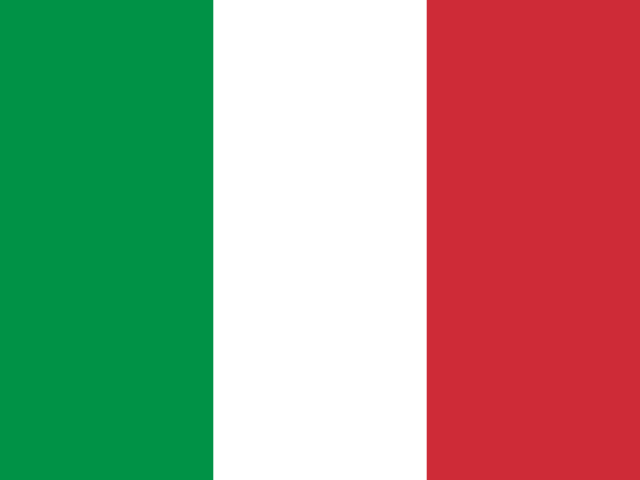
The Italian flag, known as Il Tricolore, has three equal vertical stripes of green, white and red, with green at the hoist. Article 12 of the Italian constitution states simply that the flag of the Republic is the Italian tricolour, green, white and red, in three vertical bands of equal size.
What the colours mean
- There is no official meaning for the colours, but many interpretations have grown up over the years.
- The landscape theory: a popular reading says green stands for Italy's plains and hills, white for the snow of the Alps, and red for the blood shed in the wars of independence.
- The virtues theory: another traditional interpretation links the colours to the three theological virtues: green for hope, white for faith and red for charity.
- The historical explanation: most historians trace the green to the uniforms of the civic guard of Milan in the 1790s, which replaced the blue of the French tricolour with green, while white and red were already the colours of Milan's coat of arms.
Where the flag came from
The tricolour was born during the French Revolutionary Wars, when Napoleon's armies swept into northern Italy and set up new republics inspired by France. On 7 January 1797, in Reggio Emilia, the Cispadane Republic adopted a green, white and red flag, and that date is now celebrated as the national Flag Day, the Festa del Tricolore. The colours soon became the symbol of the Risorgimento, the movement to unite Italy and free it from foreign rule.
In 1848 King Charles Albert of Sardinia adopted the tricolour with the shield of the House of Savoy in the centre, and this became the flag of the Kingdom of Italy when the country was unified in 1861. After Italians voted to abolish the monarchy in 1946, the royal coat of arms was removed, and the plain green, white and red tricolour was confirmed in the constitution that came into force on 1 January 1948.
Flag facts most people get wrong
- It is not the Mexican flag. Mexico also has vertical green, white and red stripes, but its flag carries a central coat of arms showing an eagle, has longer proportions and uses darker shades.
- It is not the Irish flag either. Ireland's flag has green, white and orange, not red.
- The shades are officially defined. For many years the exact colours were left open, and Italian flags could vary widely; official shades have since been set by government regulations.
- The old flag had a royal shield. Many people do not realise that from 1848 until 1946 the flag of Italy carried the coat of arms of the House of Savoy in its white stripe.
The Italian people: proud of their towns, their food and their families
Italy was united only in 1861, and many Italians still feel a strong attachment to their region and even to their own town, a feeling known as campanilismo, from campanile, the local bell tower. Dialects, recipes, festivals and accents change from one valley to the next, and friendly rivalries between neighbouring cities can go back centuries. At the same time, Italians share a deep pride in their language, their art and history and, above all, their food, which is treated as part of family life and cultural identity.
Family remains central to Italian life, and meals are an important time to gather, especially the long Sunday lunch. Many towns still keep the tradition of the passeggiata, an evening stroll through the main streets to see friends and be seen. Italy has also changed a great deal in recent decades: it has one of the oldest populations in Europe and a low birth rate, and it has become a country of immigration, with large communities with roots in Romania, Albania, Morocco, China and Ukraine, among others.
For more than a century, Italy was also a land of emigration. Between the 1880s and the First World War alone, millions of Italians left for the Americas and elsewhere, and today tens of millions of people around the world have Italian ancestry, especially in Argentina, Brazil, the United States, Uruguay, Canada and Australia. From New York's Little Italy to the neighbourhoods of Buenos Aires, Italian food, music and traditions have become part of everyday life far beyond Italy's borders.
Frequently asked questions about Italy
What is Italy most famous for?
Italy is famous for the Colosseum, the Leaning Tower of Pisa, Venice and its canals, and Renaissance cities such as Florence; for food such as pizza, pasta and gelato, as well as espresso and wine; for artists such as Leonardo da Vinci and Michelangelo; for opera, fashion and sports cars such as Ferrari; and for landscapes ranging from the Dolomites and the Italian Lakes to Tuscany and the Amalfi Coast.
What do the colours of the Italian flag mean?
There is no official meaning, but popular interpretations say green represents Italy's plains and hills, white the snowy Alps, and red the blood shed for independence; another tradition links them to hope, faith and charity. Historically, the green came from the uniforms of Milan's civic guard in the 1790s, and the flag was first adopted by the Cispadane Republic on 7 January 1797.
What is the capital of Italy?
The capital of Italy is Rome, which has been the capital since 1871. Before that, the young Kingdom of Italy had its capital first in Turin, from 1861, and then in Florence, from 1865.
How many regions does Italy have?
Italy has 20 regions: Abruzzo, Aosta Valley, Apulia (Puglia), Basilicata, Calabria, Campania, Emilia-Romagna, Friuli Venezia Giulia, Lazio, Liguria, Lombardy, Marche, Molise, Piedmont, Sardinia, Sicily, Trentino-Alto Adige/Südtirol, Tuscany, Umbria and the Veneto.
Is Vatican City part of Italy?
No. Vatican City is an independent state, the smallest in the world, created by the Lateran Treaty of 1929. It is entirely surrounded by the city of Rome and is the seat of the Pope. San Marino, in the hills near Rimini, is another independent country surrounded by Italy.
Own a square of the Italian flag
On 195 Flags, the flag of Italy is being rebuilt one square at a time by people in Italy and around the world. Claim your square for $1.99 and seal a message and a photo inside it: a time capsule for your future self and the generations who come after you. And when the Italian flag is completely filled, one square owner wins $40,000.
Claim your square of the Italian flag →
Photo credits
- Colosseum, Rome (cover): Nicholas Hartmann, CC BY-SA 4.0, via Wikimedia Commons
- Leaning Tower and Cathedral, Pisa: José Luiz, CC BY-SA 3.0, via Wikimedia Commons
- Rialto Bridge and Grand Canal, Venice: Saffron Blaze, CC BY-SA 3.0, via Wikimedia Commons
- Florence Cathedral: Zairon, CC BY 4.0, via Wikimedia Commons
- Trevi Fountain, Rome: Diliff, CC BY 3.0, via Wikimedia Commons
- St Peter's Basilica: Alvesgaspar, CC BY-SA 4.0, via Wikimedia Commons
- Forum of Pompeii and Vesuvius: Commonists, CC BY-SA 4.0, via Wikimedia Commons
- Tre Cime di Lavaredo, Dolomites: Paul Colin Hennig firstdorsal.eu, CC BY-SA 4.0, via Wikimedia Commons
- Val d'Orcia, Tuscany: Enrico Pighetti from Civitanova Marche, Italia, CC BY 2.0, via Wikimedia Commons
- Milan Cathedral and Galleria Vittorio Emanuele II: Steffen Schmitz, CC BY-SA 4.0, via Wikimedia Commons
- Bellagio and Lake Como: Zairon, CC BY-SA 4.0, via Wikimedia Commons
- Positano, Amalfi Coast: Wiki.Bianco, CC BY-SA 4.0, via Wikimedia Commons
- Manarola, Cinque Terre: Timothy A. Gonsalves, CC BY-SA 4.0, via Wikimedia Commons
- Ancient theatre of Taormina and Mount Etna: Grey48, CC0, via Wikimedia Commons
- La Maddalena, Sardinia: Paolo De Carolis, CC BY-SA 3.0, via Wikimedia Commons
- Trulli, Alberobello: Giorgio Galeotti, CC BY 4.0, via Wikimedia Commons
The Italian flag image is from 195flags.com.


